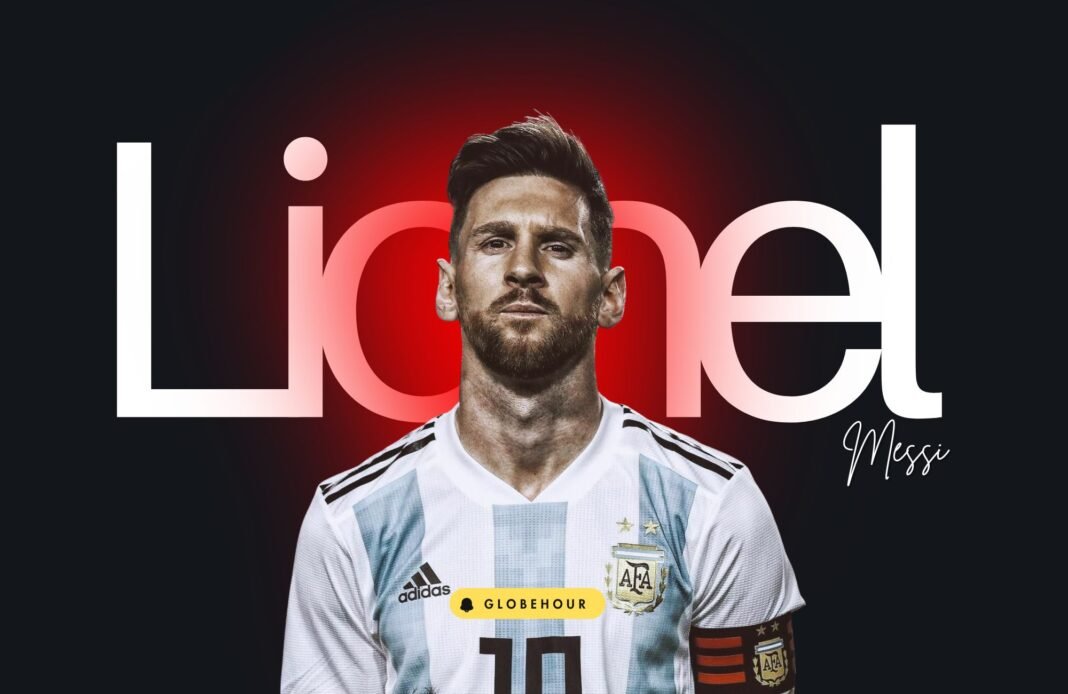
Lionel Andrés Messi — born June 24, 1987 in Rosario, Argentina — is widely regarded as the greatest football player of all time. From a skinny kid diagnosed with a growth hormone deficiency at age 10, to a record-breaking world champion who lifted every trophy the sport has to offer, his story is unmatched in the history of sport.
Over two decades of professional football, Lionel Messi has broken virtually every record imaginable: most goals for a single club (672 for FC Barcelona), most La Liga goals (474), most Ballon d'Or wins (8), and a 2012 Guinness World Record of 91 goals in a single calendar year. He is the only player in history to win the FIFA World Cup, Copa America, and the UEFA Champions League. The debate ends with him.
Lionel Messi grew up in a working-class family in Rosario, Argentina. His father Jorge was a steel factory worker and his mother Celia was a part-time cleaner. He began playing for his local club, Newell's Old Boys, at age 6, and it was immediately clear the boy was exceptional — his dribbling and movement bewildered children twice his size.
At age 10, he was diagnosed with a growth hormone deficiency — a condition that would have ended most careers before they started. Treatment cost $1,000 per month, far beyond his family's means. River Plate showed early interest but were unwilling to pay for his treatment. FC Barcelona's technical director Carles Rexach watched him at a trial in 2000 and famously wrote an offer on a paper napkin — that improvised contract began one of football's greatest love stories.
Lionel Messi made his official first-team debut for FC Barcelona on October 16, 2004 at age 17. He became the club's all-time top scorer, surpassing the legendary César's record in 2014. His 672 goals in 778 appearances is a record that may never be broken at any single club in football history. Winning 34 trophies in total, Messi transformed Barcelona from a great club into the greatest club of their era.
The peak years — 2008 to 2015 — were almost supernatural. He won four consecutive Ballon d'Or awards (2009–2012), scored 91 goals in 2012 to set a Guinness World Record, and formed one of football's most devastating combinations with Xavi and Iniesta in midfield. The 2014–15 treble season with the MSN trio (Messi–Suárez–Neymar) is regarded as possibly the best club side ever assembled — scoring 131 combined goals that campaign.
In August 2021, Messi left Barcelona in tears — not by choice, but because of a catastrophic financial crisis at the club and strict La Liga Financial Fair Play rules that made his renewal impossible. His emotional farewell press conference, where he wept openly, became one of the most watched moments in football history. After 21 years, the boy from Rosario said goodbye to the city that had made him — moving to Paris Saint-Germain.
Messi joined Paris Saint-Germain alongside Neymar and Kylian Mbappé — a front three that looked unstoppable on paper. Reality was different. A COVID infection early in the season, adapting to a new city, new football culture, and an unfamiliar tactical system slowed him significantly. His first season — 34 games, just 11 goals — was widely regarded as the worst of his professional career.
The second PSG season brought improvement: 21 goals and 20 assists in 41 games, plus two Ligue 1 titles. But more importantly, the PSG years held his most treasured trophy. Playing for Argentina during the 2022 Qatar World Cup — while based in Paris — Lionel Messi delivered the greatest individual World Cup performance of the modern era, winning the Golden Ball and lifting the one trophy that had always escaped him.
In July 2023, Lionel Messi made the move that shook American sports culture to its core. His arrival at Inter Miami CF — co-owned by David Beckham — instantly transformed the MLS into a globally watched league. He scored a free-kick winner on his debut and never looked back, winning the Leagues Cup in his very first tournament with the club.
In 2024, his first full MLS season, Messi scored 21 goals and provided 17 assists in just 24 games, winning the MLS MVP award. Inter Miami broke the all-time MLS points record with 74 points. In 2025, he led Miami to their first-ever MLS Cup title, winning a back-to-back MVP — making him the most dominant individual presence in the competition's history.
Messi made his senior Argentina debut on August 17, 2005, aged 18 — and was sent off after just 47 seconds for elbowing a defender. For years, the narrative was cruel: Maradona had the 1986 World Cup, and Messi had nothing. Four World Cups came and went without the ultimate prize, including a heartbreaking final defeat to Germany in Brazil 2014.
The redemption arc began in 2021. Argentina won the Copa America — their first major title since 1993 — beating Brazil in the final at the Maracanã. Then came Qatar 2022. Messi's tournament was transcendent: 7 goals, 3 assists, a Golden Ball, a penalty scored in the final shootout against France in the greatest World Cup final ever played. In 2024, he won a third Copa America title on American soil.
← Scroll to see full stats →
| Club / Team | Country | Period | Apps | Goals | Assists | Goals/Game |
|---|---|---|---|---|---|---|
| FC Barcelona | 🇪🇸 Spain | 2004–2021 | 778 | 672 | 305 | 0.86 |
| Paris Saint-Germain | 🇫🇷 France | 2021–2023 | 75 | 32 | 35 | 0.43 |
| Inter Miami CF | 🇺🇸 USA | 2023–Present | 77+ | 77+ | 40+ | 1.00+ |
| Argentina National | 🇦🇷 Argentina | 2005–Present | 180+ | 106+ | 61+ | 0.59 |
| CAREER TOTAL | — | 2004–Present | 1,100+ | 900+ | 428+ | ~0.82 |
← Scroll to see full awards →
| Award | Times Won | Years |
|---|---|---|
| Ballon d'Or | 8 | 2009, 2010, 2011, 2012, 2015, 2019, 2021, 2023 |
| FIFA Best Male Player | 2 | 2019, 2023 |
| European Golden Shoe | 6 | 2010, 2012, 2013, 2017, 2018, 2019 |
| FIFA World Cup Golden Ball | 2 | 2014 (Runner-Up), 2022 (Champion) |
| La Liga Best Player (Pichichi) | 8 | Multiple seasons 2009–2019 |
| UEFA Best Player in Europe | 3 | 2011, 2015, 2019 |
| MLS Most Valuable Player | 2 | 2024, 2025 |
| FIFA FIFPro World XI | 17 | 2007–2023 |